- Info@revivewellnessla.comInfo@revivewellnessla.com
- 323-451‑5591323-451‑5591

IV Therapy for Food Poisoning: When a Drip Helps (and When to See a Doctor)
Can an IV help food poisoning? How a drip treats the dehydration and nausea, when it’s the right call, the red flags that need a doctor, and at-home drips in LA.
Revive Wellness LA • Mobile IV therapy across Los Angeles • Call (323) 451-5591
Medically reviewed by Israel M. Gabaie, FNP-BC • Last reviewed June 2026
Food poisoning hits fast and hard — a bad meal, and hours later you’re locked in a cycle of vomiting, diarrhea, and the wrung-out weakness of losing fluids faster than you can replace them. When you can’t keep even water down, an IV drip sounds like exactly what you need. So can IV therapy help food poisoning, and when is it the right call versus riding it out? Here’s the honest guide — including the warning signs that mean you need a doctor, not a drip.
What a drip does
Oral vs. IV rehydration
Red flags to know
At-home in Los Angeles
Oral vs. IV rehydration
Red flags to know
At-home in Los Angeles
Quick Answer: Can an IV help food poisoning?
IV therapy can genuinely help food poisoning — but for the dehydration, not the cause. Food poisoning drains fluids and electrolytes through vomiting and diarrhea, and an IV restores them quickly while anti-nausea medication can settle your stomach so you stop the can’t-keep-anything-down cycle. What it doesn’t do is “cure” the illness; most food poisoning is self-limited and clears on its own. For mild cases, slow sips of an oral rehydration solution work; an IV makes sense when you can’t keep fluids down or are getting dehydrated. Severe symptoms need urgent medical care.
Hydration & Anti-Nausea IV
Rapid IV fluids and electrolytes with anti-nausea support to break the vomiting cycle and rehydrate you — delivered at home, so you don’t have to drive while you’re miserable.
Key Takeaways
- The real danger of food poisoning is dehydration, from fluid and electrolyte loss through vomiting and diarrhea — and that’s exactly what an IV addresses directly.
- An IV rehydrates fast and can include anti-nausea medication, which often breaks the cycle where every sip comes back up, letting you start to recover.
- It doesn’t cure the illness. Most food poisoning is self-limited and resolves on its own; the IV is supportive care that helps you cope and rehydrate more comfortably.
- Mild cases respond to oral rehydration — slow, frequent sips of an electrolyte solution. An IV is for when that fails or dehydration sets in.
- Some symptoms need a doctor or ER, not a home drip — high fever, bloody stool, signs of severe dehydration, or symptoms lasting beyond a couple of days.
What food poisoning does to your body
Food poisoning (foodborne illness) comes from eating food contaminated with bacteria, viruses, or their toxins. The hallmark symptoms — nausea, vomiting, diarrhea, cramps, sometimes fever — are your body working to expel the offender. The danger isn’t usually the bug itself but what the fluid loss does: vomiting and diarrhea flush out water and electrolytes (sodium, potassium, and more) faster than you can drink them back, and that dehydration causes the dizziness, weakness, and crushing fatigue that make you feel so terrible.
Food poisoning vs. stomach flu: how to tell
People often use the terms interchangeably, but they’re different — though the supportive treatment (fluids and rest) overlaps a lot:
| Food poisoning | Stomach flu (viral gastroenteritis) | |
|---|---|---|
| Cause | Contaminated food (bacteria, viruses, toxins) | A contagious virus passed person-to-person |
| Onset | Often fast — hours after a bad meal | Usually 1–2 days after exposure |
| Spread | Not typically contagious | Easily spreads to others |
| What helps | Rest, fluids/electrolytes, and time — an IV helps the dehydration in both | |
The practical point: you don’t always need to know which one you have to manage it, because the supportive care is similar. If you’d like the deep dive on the viral version, see our guide to stomach flu IV treatment.
What’s in a food-poisoning IV
- IV fluids: rehydrate quickly and restore blood volume when you can’t drink.
- Electrolytes: replace the sodium, potassium, and minerals lost to vomiting and diarrhea.
- Anti-nausea medication: where appropriate, to calm the stomach so fluids stay down.
- B vitamins: sometimes added to support energy when you’re wiped out.
The biggest practical win is the combination: rehydration plus anti-nausea support can stop the vicious cycle of vomiting back everything you try to drink.
When oral rehydration is enough vs. when an IV helps
Sips usually do the job when
- You can keep small amounts of fluid down
- Symptoms are mild and improving
- You’re not showing signs of dehydration
An IV makes sense when
- You can’t keep any fluids down
- Vomiting or diarrhea is frequent and persistent
- You’re getting dehydrated (dizzy, weak, dark urine)
For mild illness, oral rehydration solutions sipped slowly are remarkably effective and are the first-line approach. An IV steps in when the gut won’t cooperate.
When to skip the drip and get medical care now: seek a doctor or emergency care for a high fever, blood in vomit or stool, signs of severe dehydration (little or no urination, severe dizziness, confusion), severe abdominal pain, or symptoms lasting more than 2–3 days. Infants, older adults, pregnant people, and those with chronic illness should be evaluated sooner. The CDC’s food poisoning guidance outlines these danger signs — a home IV is not a substitute for emergency care.
Who should be extra cautious
For most healthy adults, food poisoning is miserable but self-limited. Some groups, though, are more vulnerable to dehydration and complications and should reach out to a medical provider sooner rather than relying on home care:
- Infants and young children — they dehydrate quickly and need prompt medical guidance.
- Older adults — dehydration carries more risk and can escalate faster.
- Pregnant people — should contact their OB; care is directed by their provider.
- Anyone with a chronic illness or weakened immune system — lower threshold to be evaluated.
If you’re in one of these groups, treat the warning signs above as a reason to call a provider early, not to wait it out.
How to care for yourself while it passes
- Rest and let it run its course. Your body is clearing the offender; sleep and downtime help.
- Sip, don’t gulp. Small, frequent sips of water or an oral rehydration solution stay down better than large amounts.
- Ease back into food. When you’re ready, start with bland, simple foods (toast, rice, bananas) rather than rich or greasy meals.
- Escalate if it’s not improving. If you can’t keep fluids down, you’re getting dehydrated, or red-flag symptoms appear, get medical care — an at-home IV can help with the dehydration when appropriate.
Does an IV cure food poisoning?
No — and any provider implying otherwise is overselling. Most foodborne illness is self-limited: it resolves as your body clears the offending bacteria, virus, or toxin, usually within a day or two. There’s no drip that neutralizes the cause. What an IV does is treat the most dangerous and miserable part — dehydration and nausea — so you feel better and recover more comfortably while it runs its course.
The at-home advantage when you’re this sick
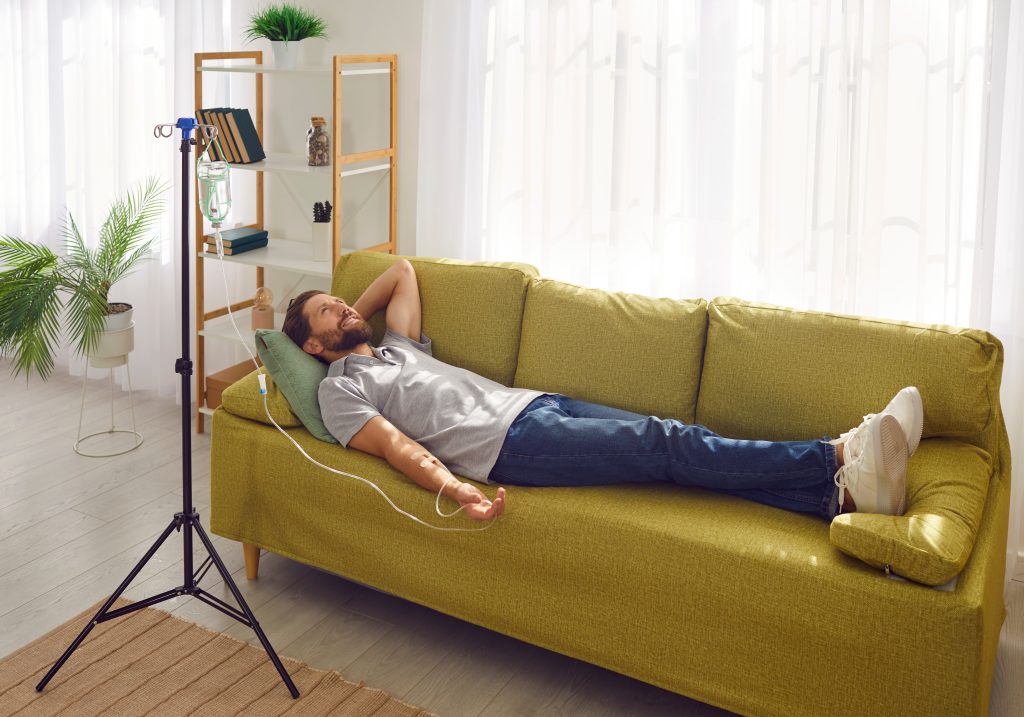
When you’re vomiting and exhausted, getting in a car is the last thing you want — and a clinic waiting room isn’t where you want to be either. A mobile IV brings a licensed clinician to you, so you rehydrate in your own comfort, no driving required.
Bottom Line: Is an IV Worth It for Food Poisoning?
- An IV directly treats food poisoning’s real danger — dehydration — and anti-nausea support can break the can’t-keep-fluids-down cycle.
- It doesn’t cure the illness, which clears on its own in a day or two.
- Mild cases respond to slow oral rehydration; save the IV for when you can’t keep fluids down.
- High fever, bloody stool, or signs of severe dehydration need a doctor or ER, not a drip.
- At home, a mobile IV lets you recover without driving while you’re miserable.
Can’t keep fluids down? Book an at-home hydration and anti-nausea IV across the LA area — a licensed clinician screens you first and will direct you to emergency care if your symptoms call for it.
Call (323) 451-5591 • Mobile IV across Los Angeles
Related reading
- Stomach flu IV treatment: does a drip help?
- Does a hangover IV actually work?
- IV hydration therapy for dehydration
Related services at Revive Wellness LA
FAQ: IV therapy for food poisoning
Does an IV cure food poisoning?
No. Most food poisoning clears on its own in a day or two. An IV treats the dehydration and nausea so you feel better and recover more comfortably, but it doesn’t neutralize the cause.
How fast does a food-poisoning IV work?
Many people feel noticeably better within or shortly after a session as fluids rehydrate them and anti-nausea medication settles the stomach — biggest when dehydration and nausea are driving how awful you feel.
How long does food poisoning usually last?
Most cases resolve within a day or two as your body clears the cause. If symptoms drag on beyond 2–3 days, or red-flag signs appear, it’s time to see a doctor rather than wait it out.
What should I eat or drink while recovering?
Start with small, frequent sips of water or an oral rehydration solution. As nausea settles, ease back in with bland foods like toast, rice, or bananas, and avoid rich, greasy, or spicy meals until you feel steadier.
Should I try drinking fluids first?
Yes, for mild cases — slow, frequent sips of an oral rehydration solution are very effective. An IV is most useful when you can’t keep fluids down or are showing signs of dehydration.
When should I go to the ER instead?
For high fever, blood in vomit or stool, signs of severe dehydration (little urination, confusion, severe dizziness), severe abdominal pain, or symptoms lasting more than 2–3 days.
Is a mobile IV safe for food poisoning?
For most otherwise-healthy adults with dehydration, yes — when a licensed clinician screens you first and refers you on if red flags are present.
Can it stop me vomiting?
Anti-nausea medication delivered with the fluids can significantly reduce nausea for many people, which often lets you keep liquids down again and recover faster.
Medical disclaimer: This article is for general education only and is not medical advice. IV therapy should be guided by a licensed clinician based on your symptoms, history, and a health assessment. Food poisoning with high fever, bloody stool, severe pain, or signs of severe dehydration needs prompt medical care. If symptoms are severe, seek urgent or emergency care.